Free standard shipping over $199All prices in USD

Materials and construction

Cut it openbefore you buy it.

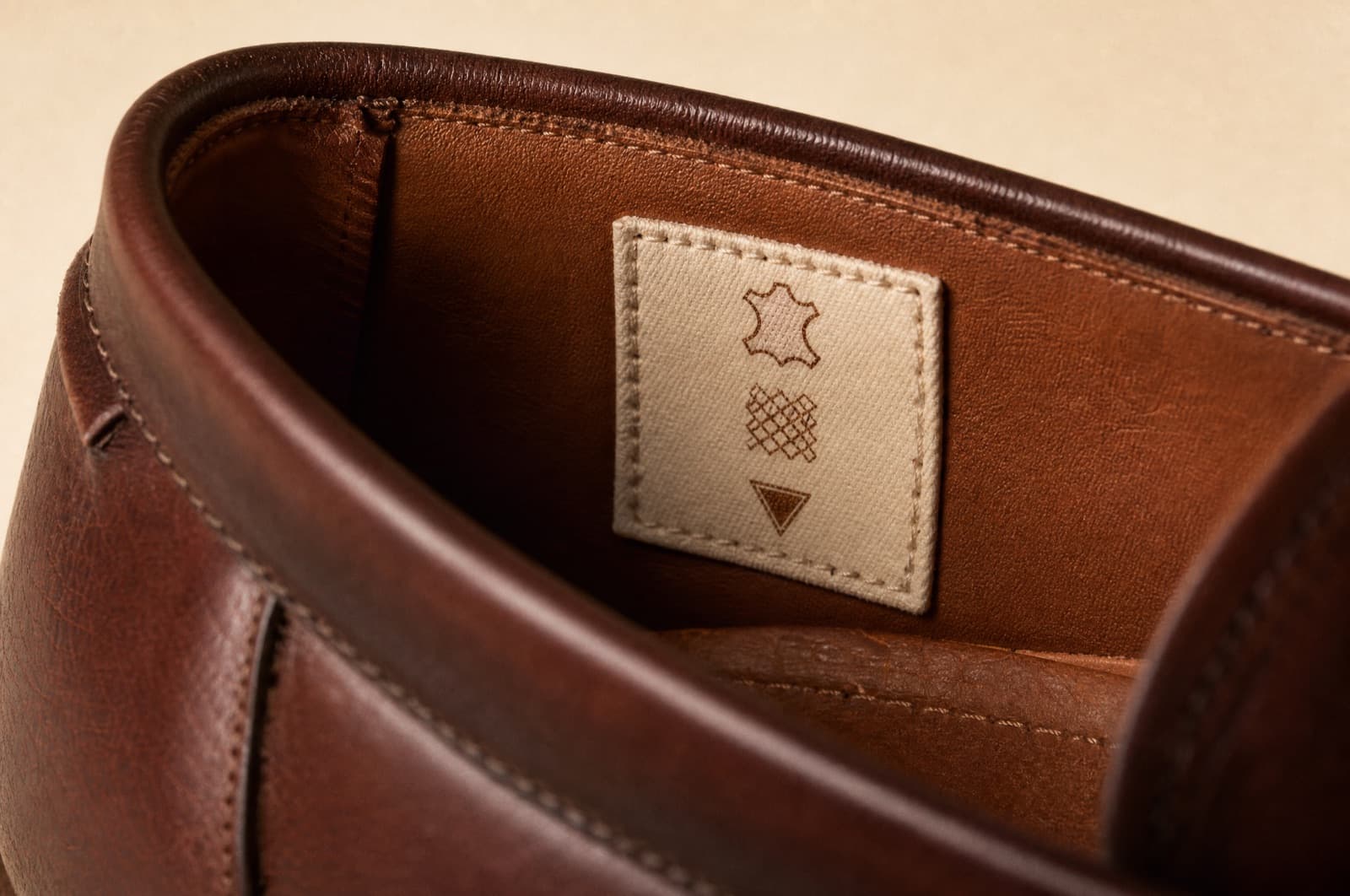
Footwear sold in the European Union has to declare what three specific parts are made of. Most sites publish that as fine print on the back of a label you only see once the box arrives. We publish it on the product page, because it is the part of the description that decides how the shoe ages.

Close view of the material label sewn inside a shoe, showing three stacked pictograms
The label sewn inside every pair. Three parts, three symbols — the same three rows as the table on each product page.

Four categories

Directive 94/11/EC gives four categories and three parts. The material declared for a part is the one covering at least 80% of its surface. Where no single material reaches 80%, the two main ones are declared.

The words matter: couro may only be used for real leather. A synthetic that looks like leather is declared as other materials with its actual composition written out — never as leather with a qualifier in front of it.

Leather

Couro

Hide or skin with its original fibrous structure more or less intact, tanned so it does not rot. If the surface coating is thicker than 0.15 mm, it is no longer leather for labelling purposes.

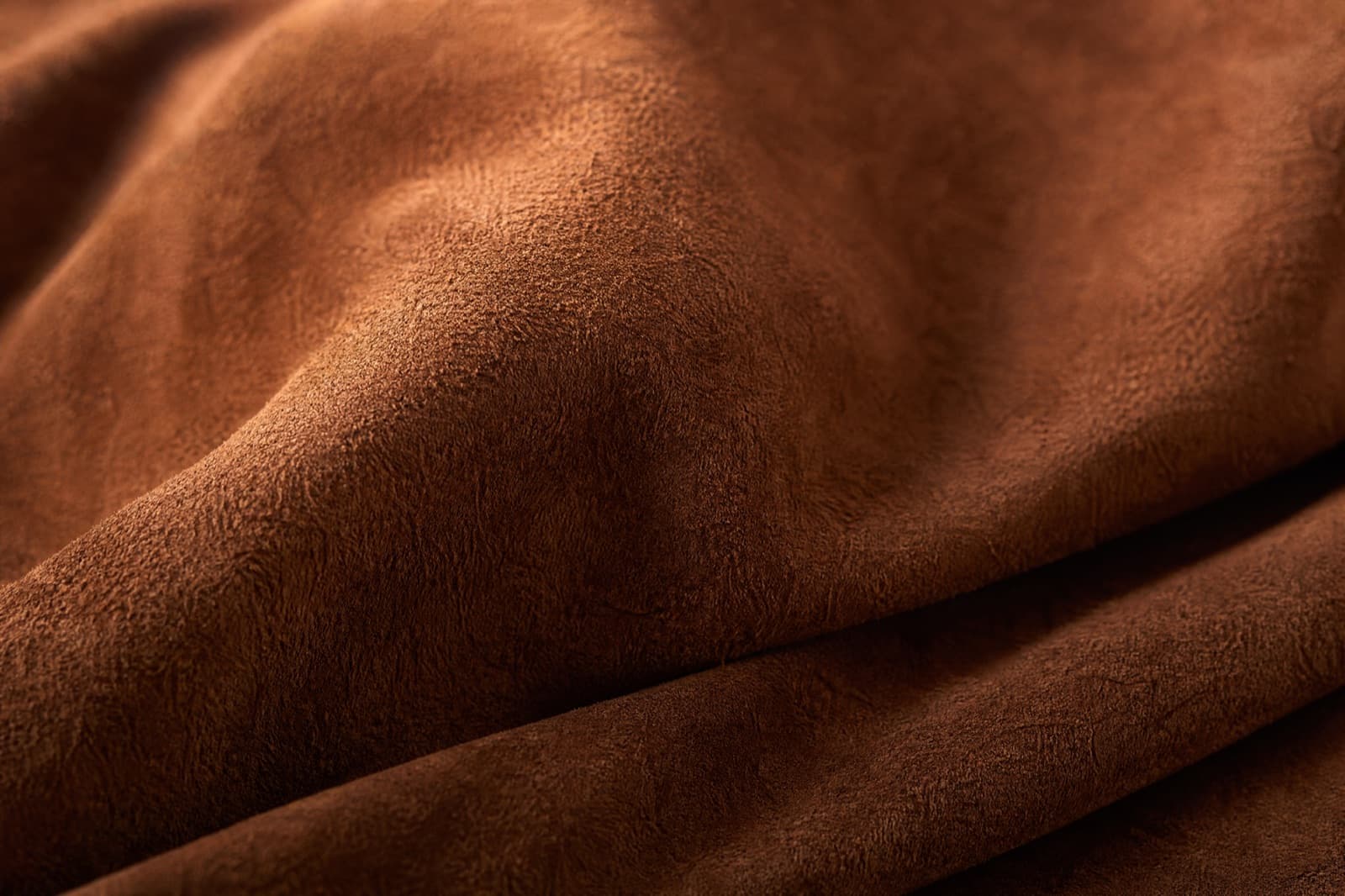
Full-grain calf, suede calf and hand-painted museum calf are all leather. Our uppers, linings, insoles and most outsoles fall here.
Coated leather

Couro revestido

Leather whose surface coating is thicker than 0.15 mm but not more than a third of the total thickness.

We do not currently use coated leather in any product. If we ever do, it will be declared under this category and not as leather.

Textile

Têxtil

Any natural or synthetic textile material, woven, knitted or non-woven.

Laces are waxed cotton, a textile. Where a lining or a boot gore is textile, it is declared as textile, not as leather.

Other materials

Outros materiais

Everything that is none of the above — rubber, thermoplastics, cork, metal, wood.

The rubber compound on a cemented outsole is declared here, not as leather. So is the rubber top piece where it is the dominant surface of a part.

The three parts

Upper (parte superior), lining and insock (forro e palmilha), outsole (sola). Each gets its own row, on the label and on the product page. A product page missing any of the three does not go live.

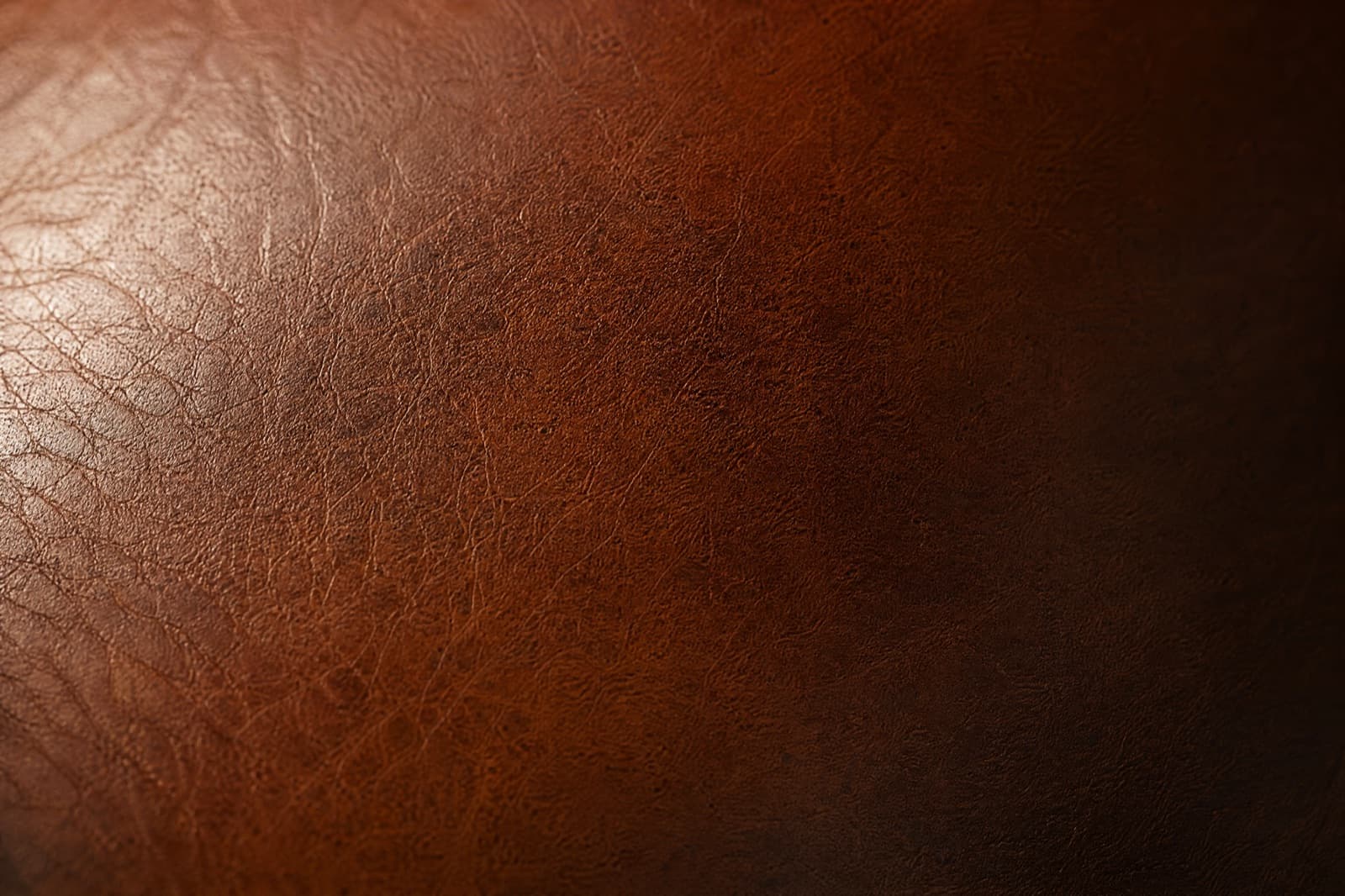
Macro photograph of full-grain calf leather showing the natural pore structure
Full-grain calf: the outer grain layer intact, pores visible. Declared as leather.
Macro photograph of suede nap showing brushed fibres
Suede: the same hide, split and brushed on the flesh side. Still leather, and declared as such.

Three constructions

How the sole is attached to the upper decides almost everything about the end of a shoe's life. It is worth two minutes of reading before you spend anything.

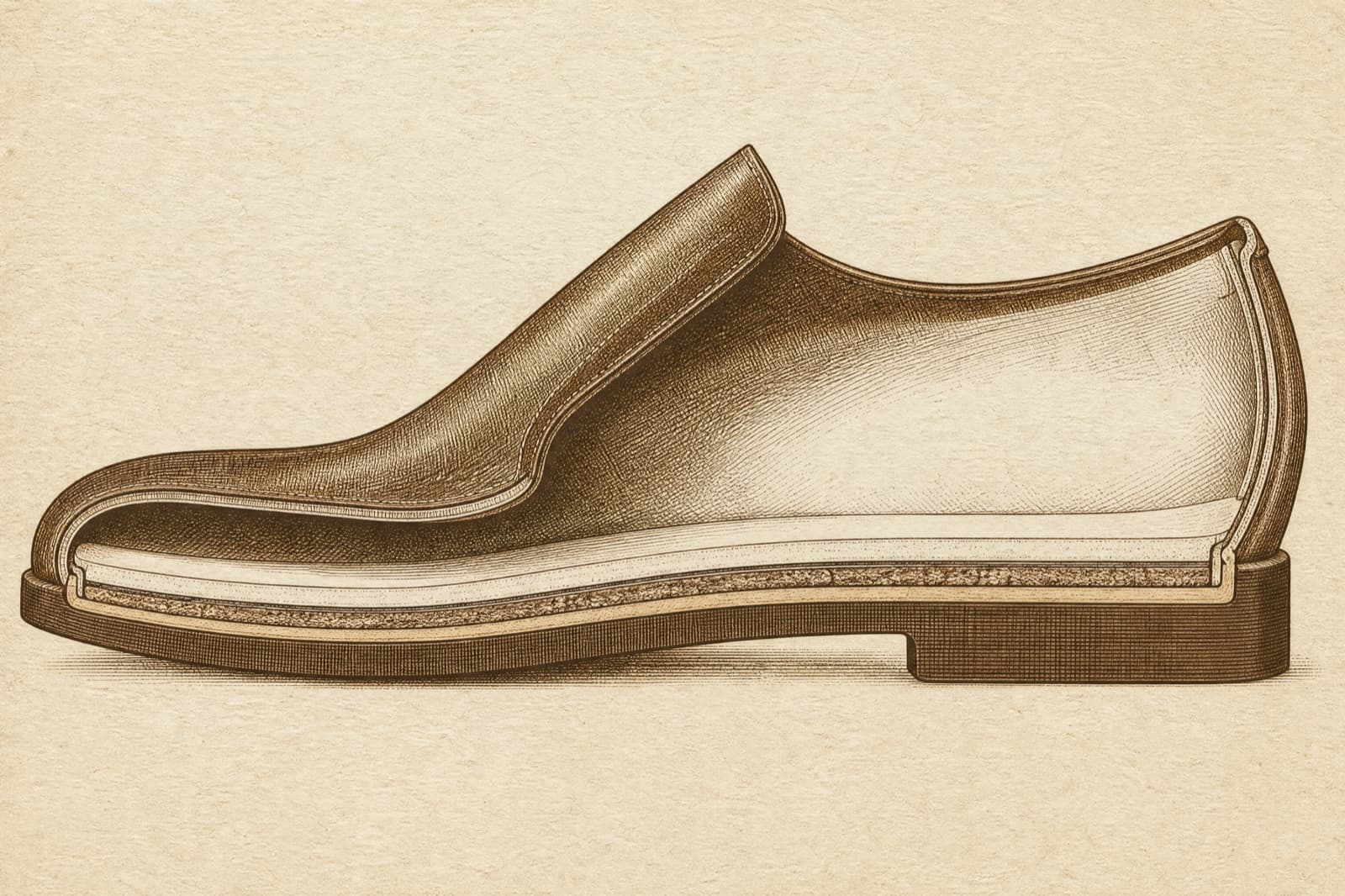
Technical cutaway of a Cemented sole

Cemented

Cannot be resoled

The upper is turned under the insole board and bonded to the outsole with adhesive. No stitching anywhere in the sole. Light, flexible from new, and finished when the outsole wears through.

4 products in the range

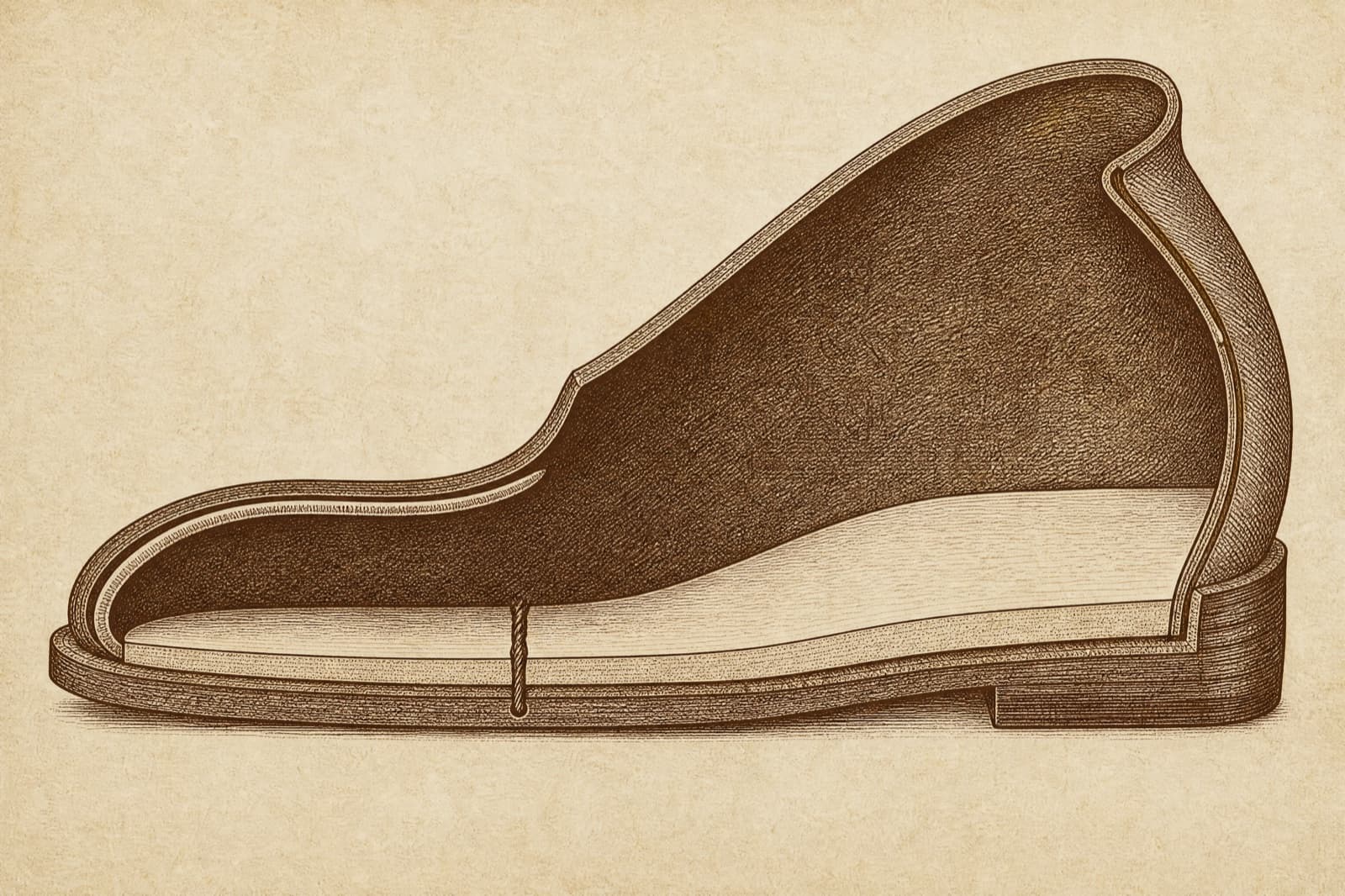
Technical cutaway of a Blake sole

Blake

Resoleable, but only with a Blake machine

A single row of stitching passes from inside the shoe through insole, upper and outsole. No welt, so the sole sits close to the upper and the shoe flexes early. Resoling is possible but needs equipment many workshops do not have.

14 products in the range

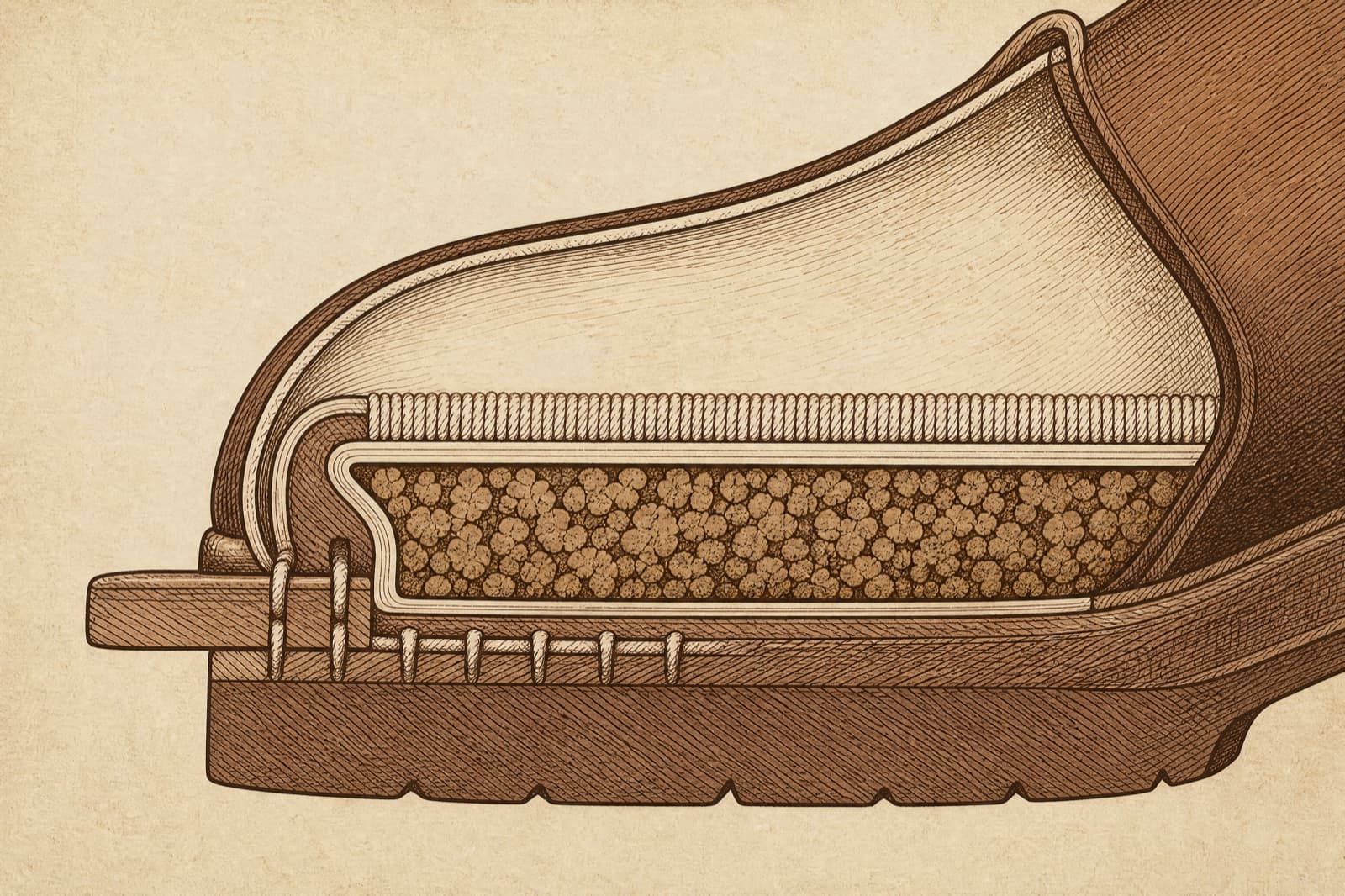
Technical cutaway of a Goodyear welted sole

Goodyear welted

Resoleable repeatedly

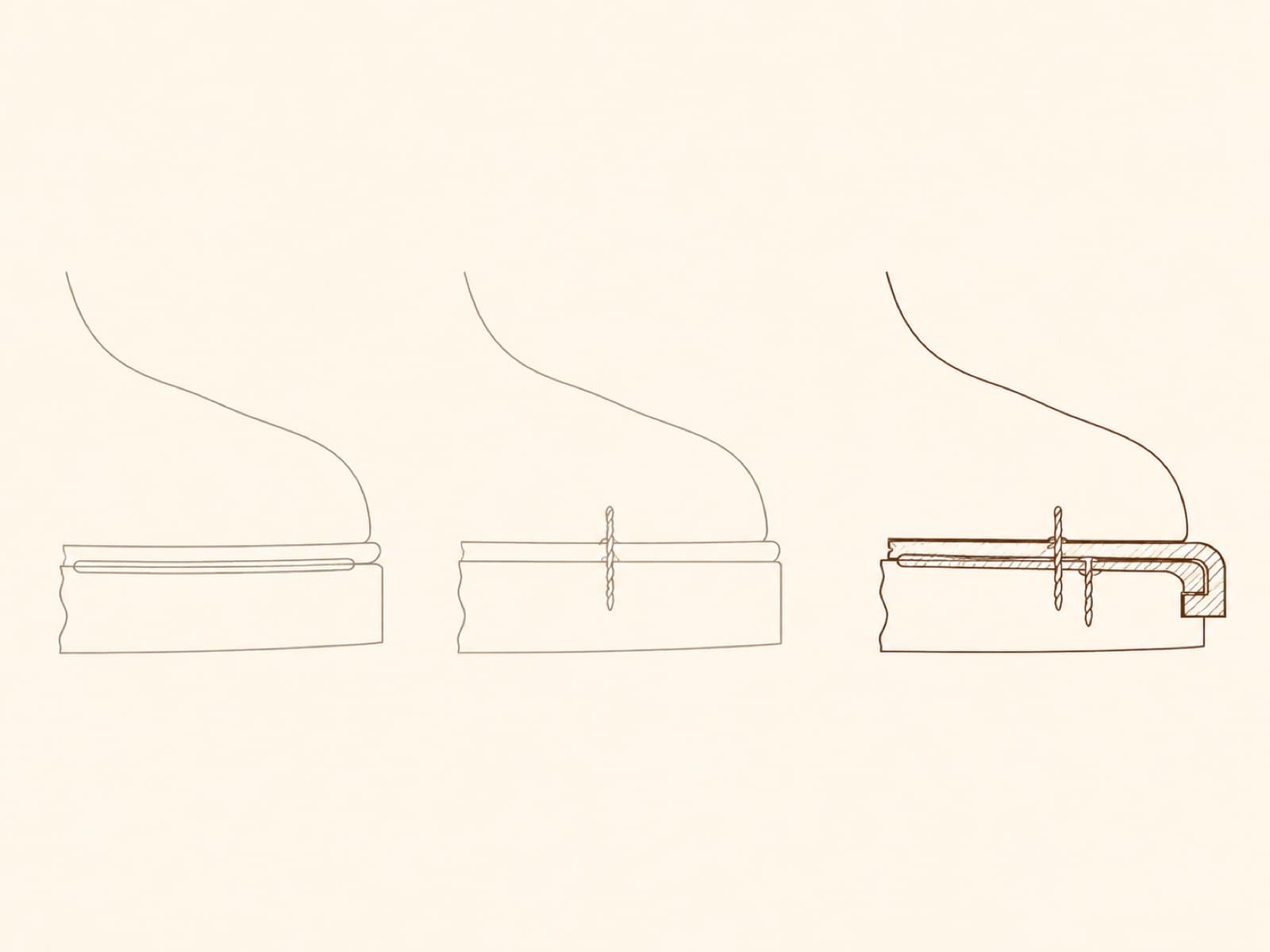
An inseam holds the upper and a welt strip to a rib on the insole; a second seam attaches that welt to the outsole. The outseam never passes through the upper, so the outsole can be cut away and replaced without touching the shoe above it.

15 products in the range

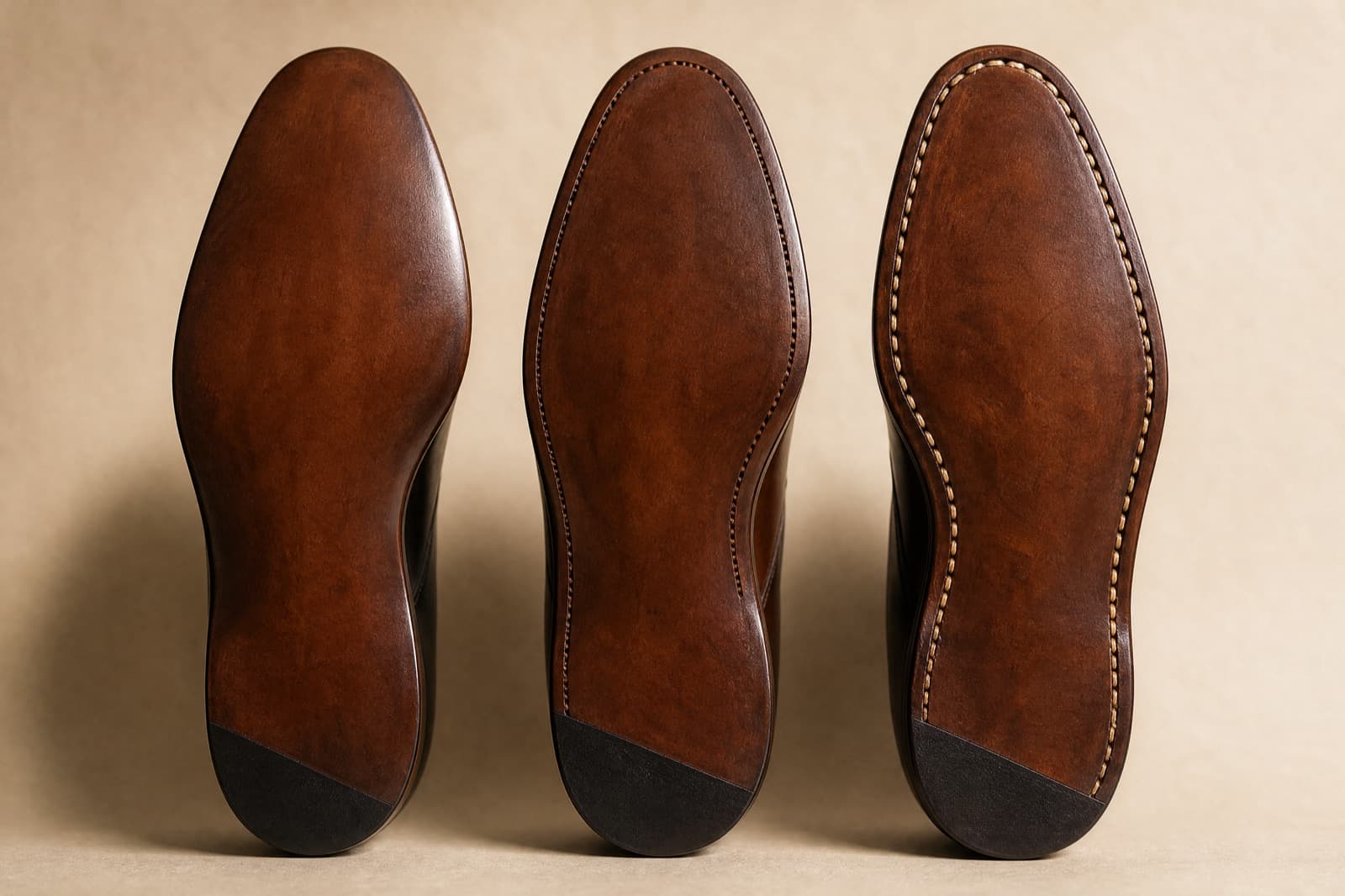
Three soles seen from underneath: one smooth with no stitching, one with a fine stitch line inside the edge, one with bold stitching around a projecting welt
Left to right: no stitching at all, one stitch line set inside the edge, and stitching that runs around a projecting welt. You can tell all three apart by turning a shoe over.
The outseam on a welted shoe. It passes through the welt and the outsole, never through the upper — which is precisely why the outsole can come off without harming the shoe.

Which pairs can actually be resoled

“Resoleable” gets used loosely across this trade, usually to describe a whole catalogue when it is true of one line in it. So here is the list, by name.

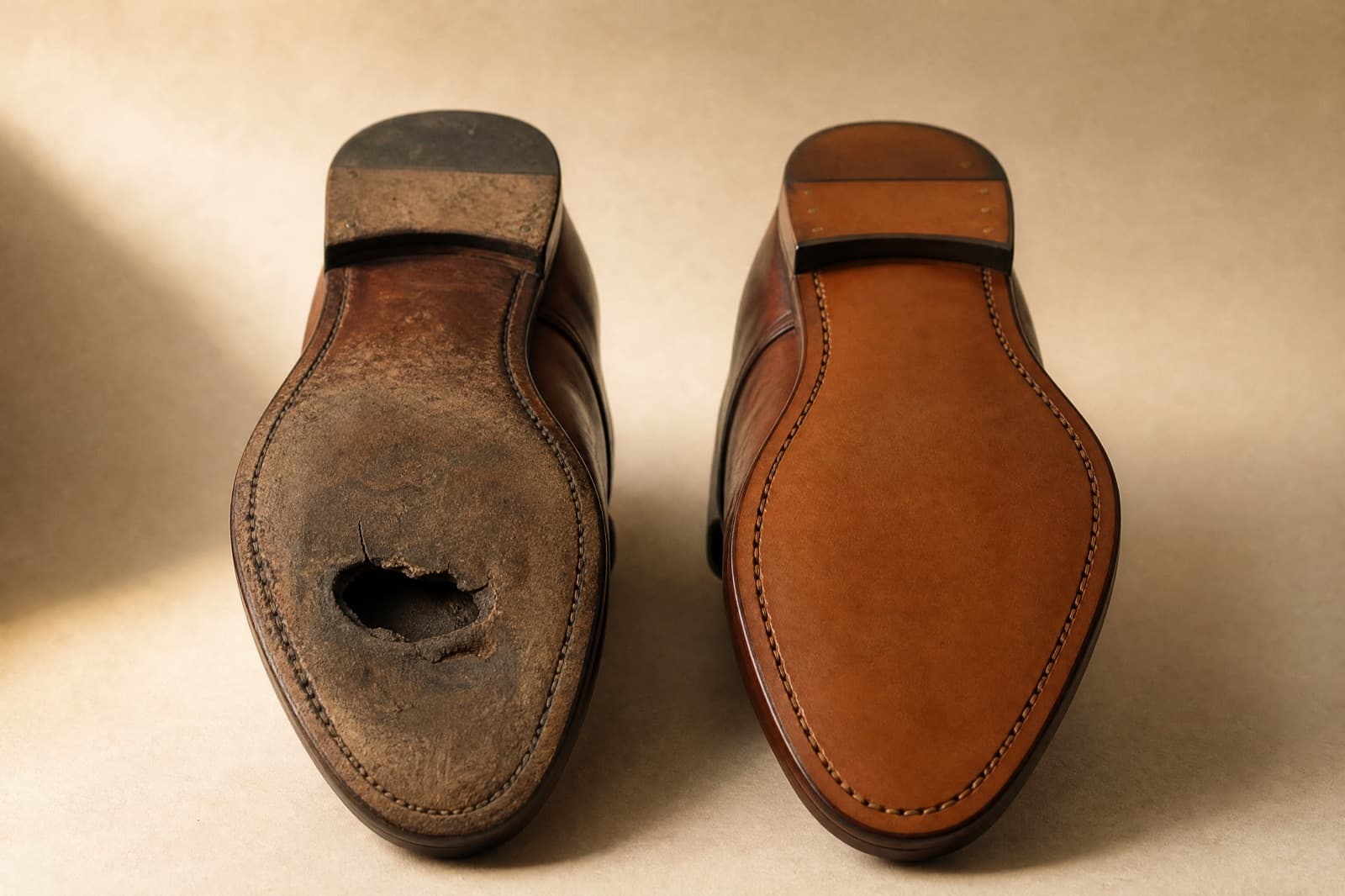
Two identical shoes seen from underneath: one with an outsole worn through at the ball, one with a new sole and fresh stitching
The same pattern, worn through and resoled. Only possible because the outseam never entered the upper.

Cannot be resoled — 4 products

Cemented. When the outsole wears through, the shoe is finished. That is the trade-off for the lowest prices in the range, and it is stated on each of those pages.

Not a service we offer — 14 products

Blake stitched pairs can be resoled by a workshop with a Blake machine, and many good repairers have one. But we do not run that service, so we will not sell you a voucher implying we do. If you own one of these and need it resoled, write to us and we will tell you what to ask a local workshop for.

Diagram of three sole cross-sections, with only the welted one drawn in solid colour
Only the third one comes apart without damage.

What is in the leather

Chromium VI
Leather articles in contact with the skin must not contain chromium VI at or above 3 mg/kg of the total dry weight. Every leather we buy is supplied against that limit and every product page states compliance.
Azo dyes
Azo colourants that can release listed aromatic amines are restricted in textiles and leather that touch the skin. Our dyes are supplied against that restriction.
Nickel release
Buckles, eyelets and hooks sit against the foot for hours at a time, so they are held to the nickel release limits that apply to articles in prolonged contact with skin.

What we will not say

  • No protective performance

    We do not sell protective footwear and make no claim of toe protection, penetration resistance, certified slip resistance or antistatic performance. These are dress shoes; do not wear them where protective footwear is required.

  • No health claims

    A leather insole takes an impression under repeated pressure. That is a physical change in a material. We do not claim it corrects anything, supports anything therapeutically, or improves how you stand or walk.

  • No origin we cannot stand behind

    Each product page states the country of manufacture as it is. We do not use a country name as decoration, and we do not describe work as handmade where it is not.

  • No absolutes

    Nothing here is waterproof, nothing lasts forever, and no leather never creases. A water-repellent finish is described with the condition it was tested at, or it is not described at all.