Standard
98mm
Tapered almond toe
Our reference last. Fits a foot measuring 9.6–10.1 cm across the ball at EU 42.
- Ball width it fits at EU 42
- 9.6–10.1 cm
- Patterns cut on it
- 31 of 33
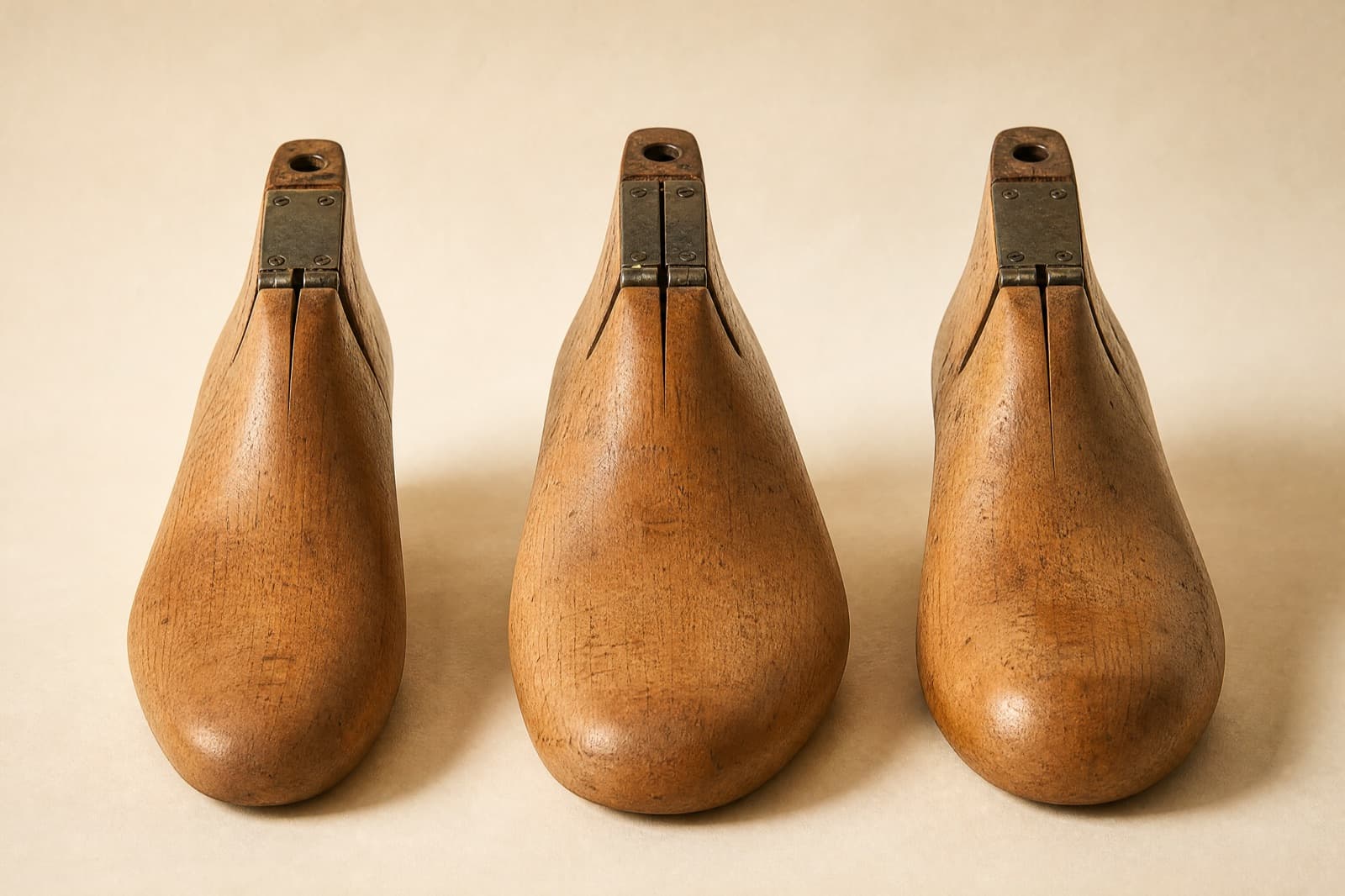
Last & width
A European size is a label, not a measurement. Two shoes marked EU 42 can differ by half a centimetre in length and a full centimetre around the ball, depending on the last they were built over. So we publish the last, the width in millimetres, and the foot length each size actually fits.
Size converter
Stand on a sheet of paper against a wall, mark the longest toe, measure from the wall to the mark. Do it late in the day, on both feet, and use the longer one. How to measure
Sizing varies between lasts even within our own range. The length in cm is the only number that means the same thing everywhere.
| EU | UK | US | Foot length | Standard | Wide |
|---|---|---|---|---|---|
| 39 | 5.5 | 6.5 | up to 24.7 cm | 92 mm | 99 mm |
| 40 | 6.5 | 7.5 | up to 25.3 cm | 94 mm | 101 mm |
| 41 | 7 | 8 | up to 26 cm | 96 mm | 103 mm |
| 42 | 8 | 9 | up to 26.7 cm | 98 mm | 105 mm |
| 43 | 9 | 10 | up to 27.3 cm | 100 mm | 107 mm |
| 44 | 9.5 | 10.5 | up to 28 cm | 102 mm | 109 mm |
| 45 | 10.5 | 11.5 | up to 28.7 cm | 104 mm | 111 mm |
| 46 | 11 | 12 | up to 29.3 cm | 106 mm | 113 mm |
Width is not the same as size. A wider last at the same length has more volume across the ball and over the instep — it does not make the shoe longer. If a shoe is the right length but presses at the joint, the answer is a wider last, not a larger size.
98mm
Tapered almond toe
Our reference last. Fits a foot measuring 9.6–10.1 cm across the ball at EU 42.
101mm
Round toe, higher instep
Three millimetres wider than Standard with more room over the instep. Fits 9.9–10.5 cm at EU 42.
105mm
Tapered almond toe, wider ball
Seven millimetres wider across the ball at the same length. Fits 10.2–10.8 cm at EU 42.
Four steps, one sheet of paper. It takes two minutes and it is the only way to order a shoe you have never tried on without guessing.
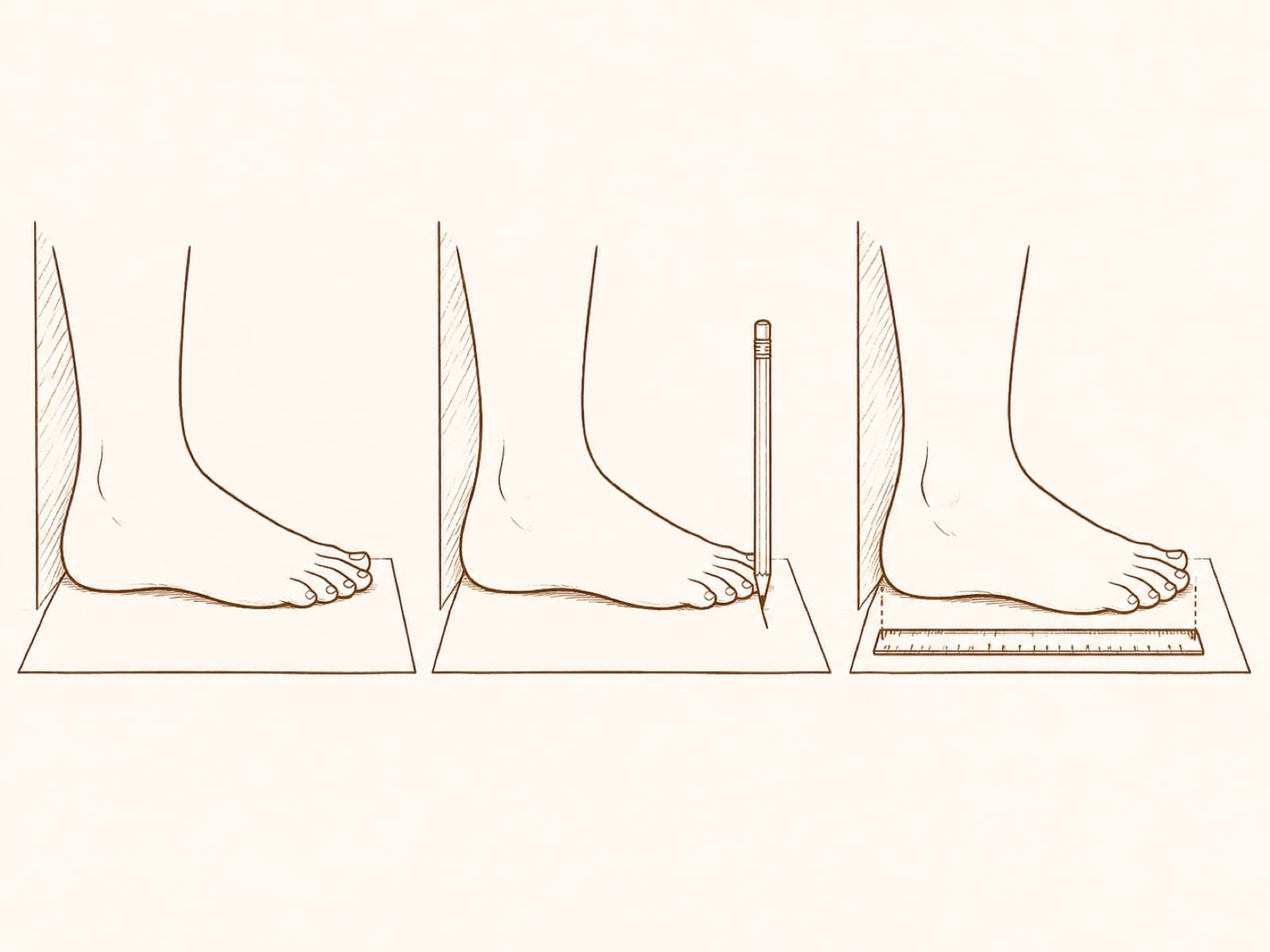
Put a sheet of paper on a hard floor with one short edge tight against the wall. Stand on it with your heel touching the wall, weight on both feet.
Hold a pencil upright and mark the paper at the tip of your longest toe. That is not always the big toe.
That distance in centimetres is your foot length. Measure both feet late in the day, when they are at their largest, and use the longer of the two.
Wrap a tape around the widest part of the forefoot, then divide by two to get the flat width across the ball. That is the number our last widths compare against.
Sizing varies between lasts even within our own range. The length in cm is the only number that means the same thing everywhere.
Not every pattern exists in Wide, and we would rather list the 7 that do than imply the whole range is available in it. A wholecut, for instance, cannot be re-lasted wider without changing the pattern completely.
If your measurement falls outside even the Wide last, tell us before you order. Send us your measurements
The last decides whether a shoe fits. The sole construction decides how the shoe ends. Three constructions, three different endings — stated on every product page, because it is the difference between a shoe you replace and a shoe you repair.
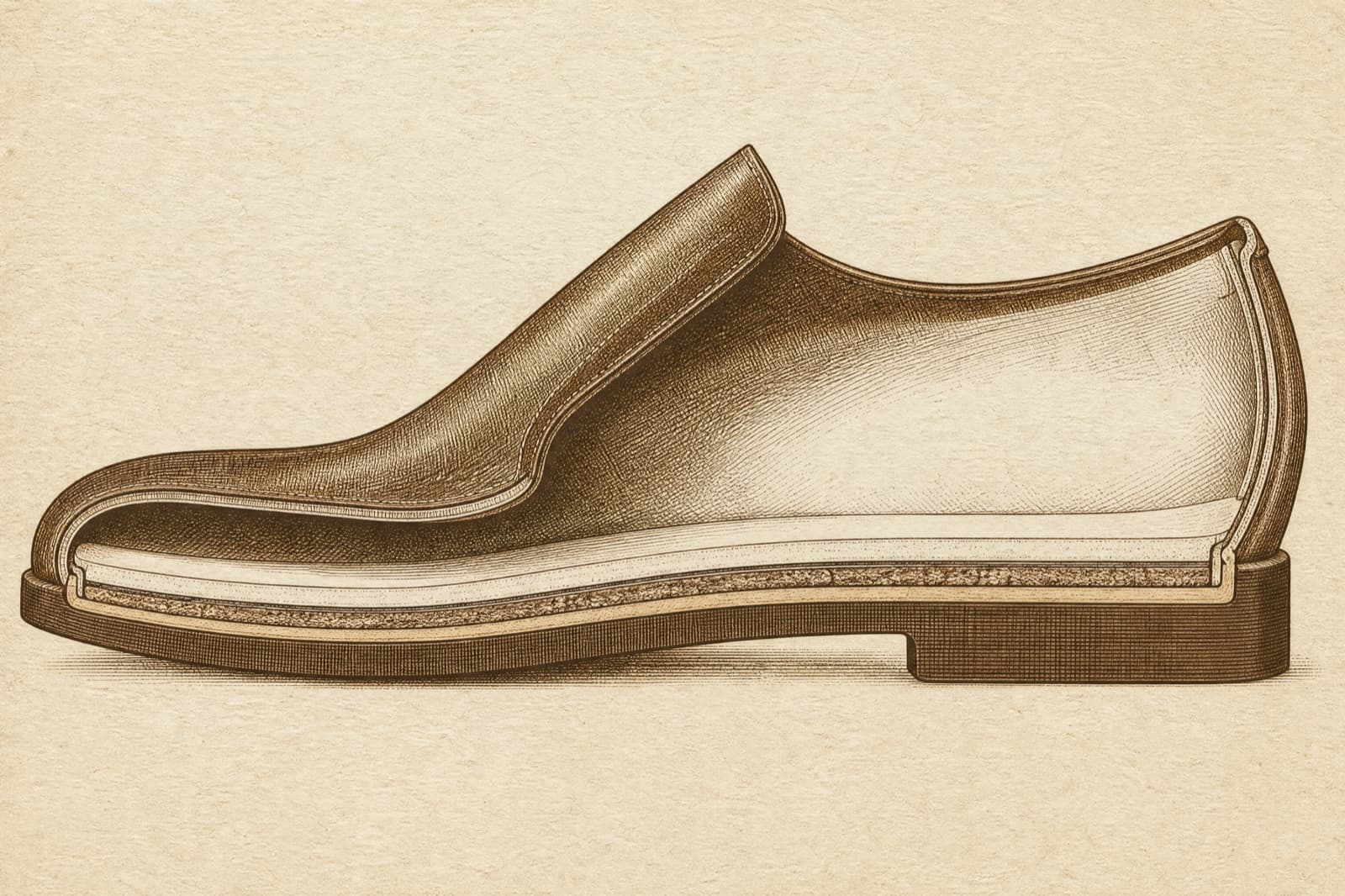
Cannot be resoled
The upper is turned under the insole board and bonded to the outsole with adhesive. No stitching anywhere in the sole. Light, flexible from new, and finished when the outsole wears through.
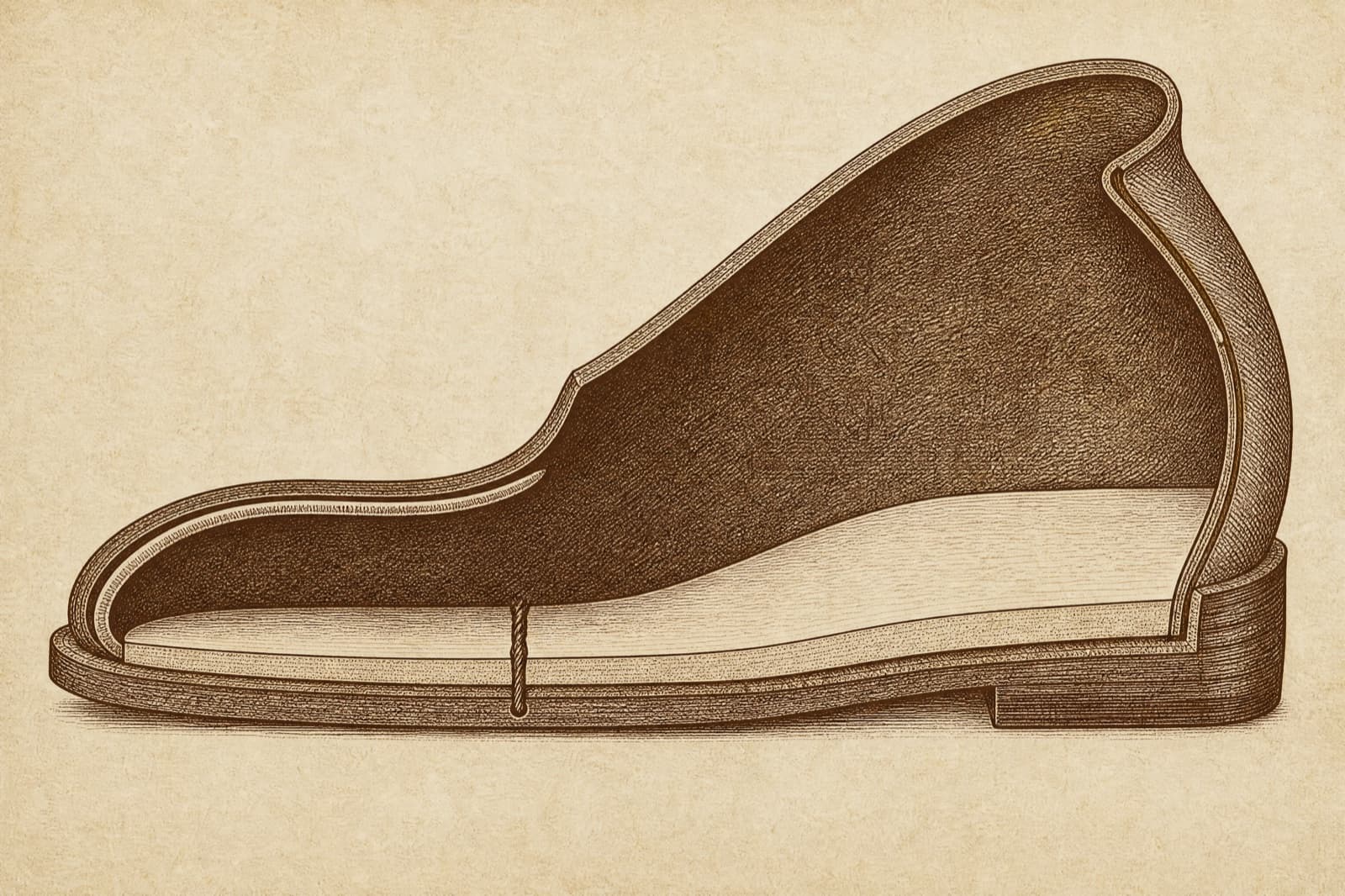
Resoleable, but only with a Blake machine
A single row of stitching passes from inside the shoe through insole, upper and outsole. No welt, so the sole sits close to the upper and the shoe flexes early. Resoling is possible but needs equipment many workshops do not have.
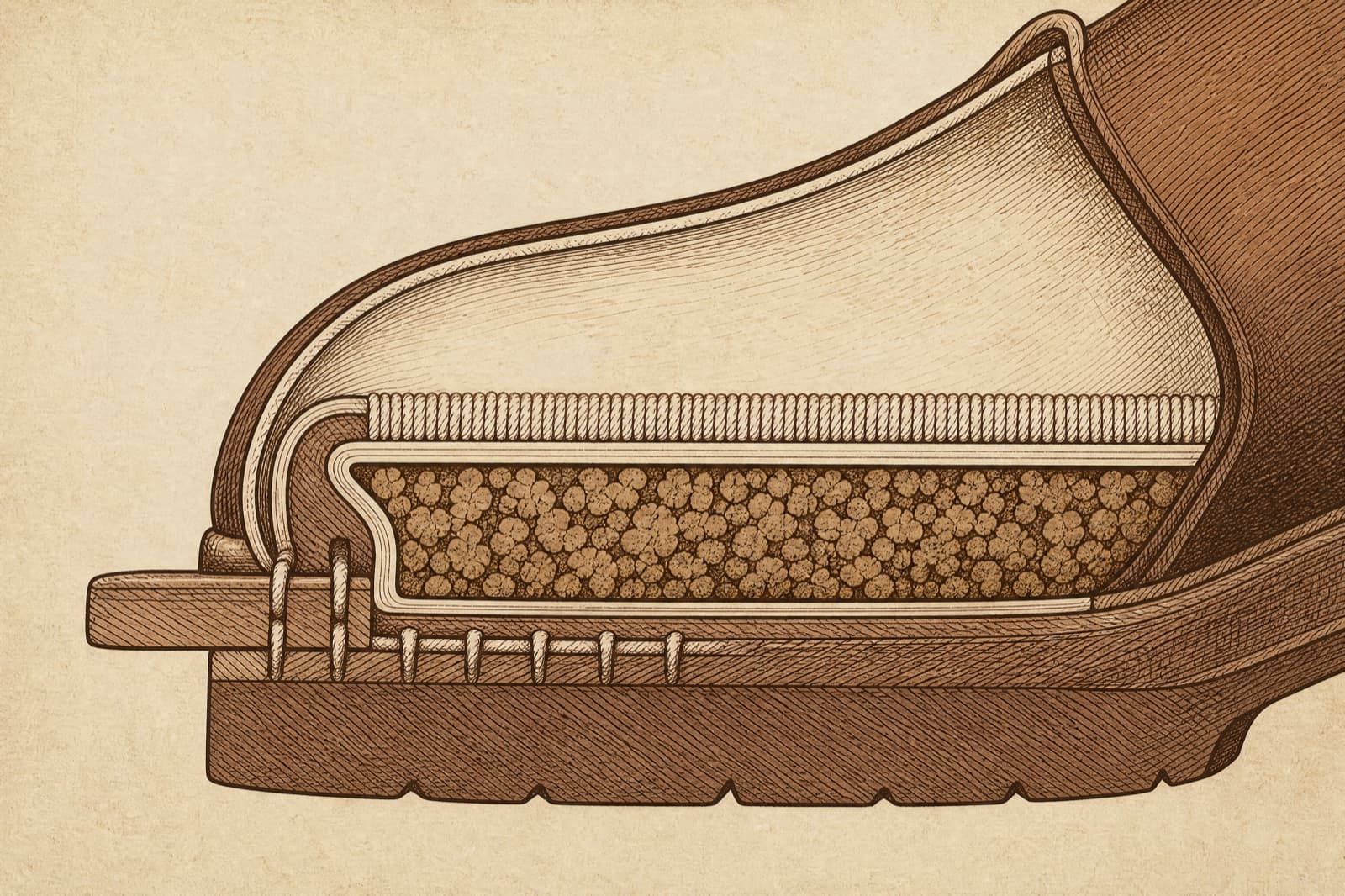
Resoleable repeatedly
An inseam holds the upper and a welt strip to a rib on the insole; a second seam attaches that welt to the outsole. The outseam never passes through the upper, so the outsole can be cut away and replaced without touching the shoe above it.